
Rise
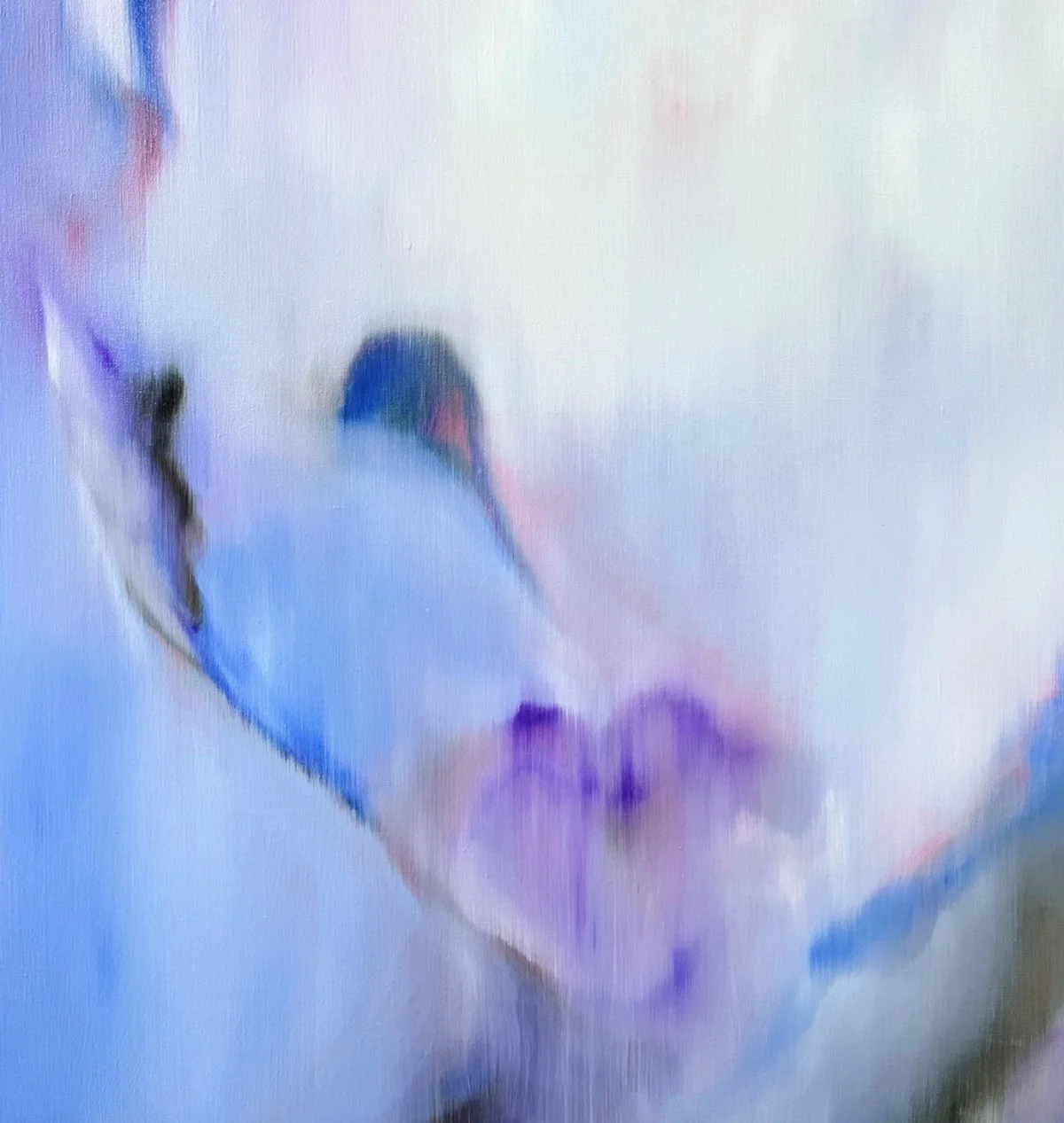
Rise is a single-release of layered strings and harp by composer Benjamin Rimmer.
Gabriella writes, “Rise has always felt to me like something living. There is breath inside of the music; a constant sense of movement, fragility, and becoming; and that, to me, is extraordinarily rare. Within the darkness, there is a sense of light. There is vulnerability, an unravelling, but alongside it comes this overwhelming sense of release; something luminous and almost beyond words.”
The inspiration for this recording came after an afternoon spent in a church in Hackney in mid-October. Sitting within a space shaped by decades of lives and stories, there was a striking awareness of atmosphere, light pouring through stained glass windows, incense suspended in the air, and the quiet spiritual weight carried by the architecture itself. Whether experienced through faith or simply through human presence, these spaces hold a kind of collective memory. In that moment, Benjamin Rimmer’s music came immediately to mind.
Recorded by three close friends: Gabriella Jones (harp), Katrina Lee (violin), and Andrew Drummond Huggan (cello), this recording realises the work through layered strings, each part recorded separately in accordance with the original score. The resulting sound world is intimate and inward: delicate, exposed, and constantly shifting between fragility and strength.
What makes Rise so compelling is its ability to inhabit contradiction. There is torment within it, but also light; vulnerability alongside an immense sense of release. It gestures towards experiences that resist explanation; those rare moments of beauty, grief, awe, or stillness that ask for complete openness in return.
Benjamin Rimmer’s music does not simply express emotion; it seems to exist within it. Rise captures that uniquely. A fragile ascent towards something vast, luminous, and deeply human.
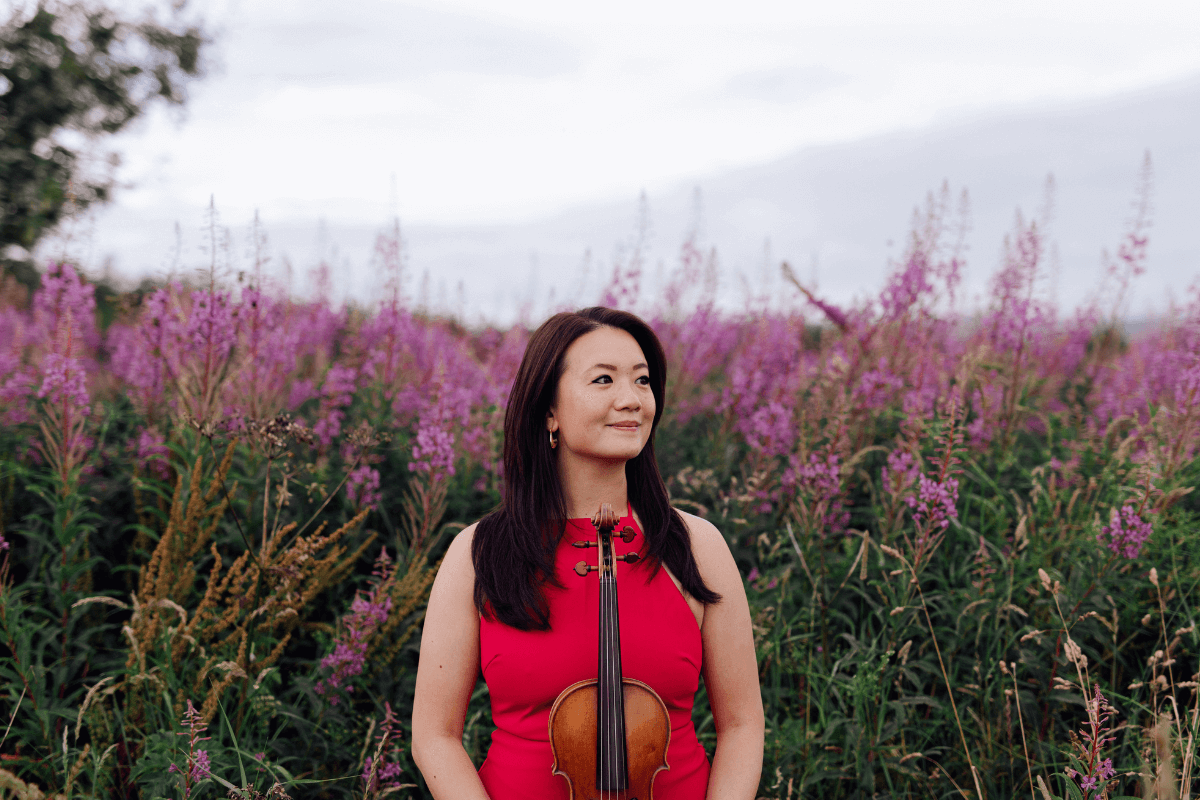
Highly acclaimed Violinist and collaborative musician Katrina Lee is known for her dedication to championing diversity and inclusion in the arts. A multi-award winning Violinist and a distinguished alumna of the Royal Conservatoire of Scotland, Katrina earned a First-Class Honours and a Master of Music under the tutelage of Professor Andrea Gajic; with her academic journey marked by numerous accolades, including the Hilda Bailey Award, Ian D. Watt Award, Governors Prize for Strings, Robert Highgate Scholarship, Governors Prize for Chamber Music, Musicians Company Goldman Award and Scottish Ensemble Young Artist.
Hailing from Yorkshire, Katrina's Violin journey began with the support of the late Stephen Bell, who recognised her love for reading and writing and thought she might enjoy translating that passion into reading music. His generous sponsorship was crucial to her early development on the instrument, and this encouragement has continually sparked Katrina’s dedication to her craft, as well as inspiring her lifelong commitment to ensure others have access to opportunities engaging in music.
In her musical pursuits, Katrina aspires to amplify the voices of historically overlooked composers who have been less heard due to systemic marginalisation. Her debut solo album, Chronicles for Solo Violin, released on Delphian Records (March 2025) focuses on the lesser-known works by Elizabeth Maconchy, Sophie Carmen Eckhardt-Gramatté and Sally Beamish. The album received the prestigious 5-star rating from BBC Music Magazine as well as reviews in the Strad and Gramophone magazines. In particular, she loves collaborations with like-minded creatives, and her chamber ensembles Escocia Duo (Violin and Classical Guitar) and Lee-Horvath Duo (Violin and Piano) both share this sentiment, presenting fresh and exciting programmes to audiences across the UK and beyond.
Katrina has performed extensively with the UK’s top orchestras and ensembles, including the Aurora Orchestra, BBC Scottish Symphony Orchestra, Scottish Chamber Orchestra, London Philharmonic Orchestra, BBC Philharmonic Orchestra, Scottish Ensemble and many more. A highlight of her work has been touring, which has enabled her to perform extensively across Europe, Asia and South America.
In addition to her performing career, Katrina is a lecturer in the Strings faculty at the Royal Conservatoire of Scotland, where she is dedicated to teaching and nurturing the next generation of musicians with a holistic approach. Katrina has also mentored numerous young musicians through the National Youth Orchestra of Scotland and Benedetti Foundation Youth Music programmes, and coached at various youth orchestra courses. Stemming from her own humble background, Katrina is an advocate for access to music for all, striving to make music education and performance opportunities available to everyone, regardless of socio-economic status.
Outside of her music, you'll find Katrina in the kitchen whipping up a feast for friends and family - or perfecting the art of eating it all herself!
Katrina plays on a contemporary Violin (2003) by Andrew Fairfax, inspired by Guarneri del Gesù, and a bow by Claude Thomassin.
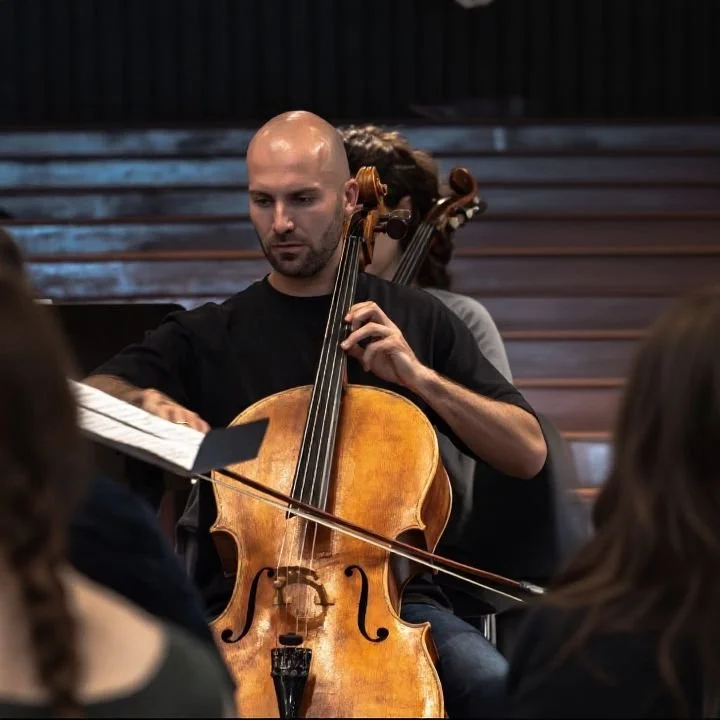
Scottish cellist Andrew Drummond Huggan trained at the Royal Conservatoire of Scotland, graduating with a BMus (Hons) and undertaking additional studies in baroque cello.
Since leaving the RCS, Andrew has built a diverse freelance career. He has performed with major UK ensembles including the Royal Scottish National Orchestra, BBC Scottish Symphony Orchestra, Manchester Camerata, Scottish Ballet, Scottish Philharmonic Orchestra, and the British Philharmonic Orchestra, and has worked extensively with Scottish Opera.
His work has taken him across Europe, the USA, Canada, China, South Korea and Oman, both as an orchestral musician and as a soloist. A notable highlight was his 2018 debut at Lincoln Center, New York. Andrew’s interest in theatre and cross-disciplinary performance has led to a range of touring projects and collaborations.
In 2019 he performed in a live BBC broadcast alongside his twin brother, percussionist Calum Huggan, in a programme showcasing new and contemporary music. He is also active as a chamber musician and has performed with several UK-based contemporary and mixed-ensemble groups.
Alongside his performing career, Andrew is a part-time lecturer at the Royal Conservatoire of Scotland, contributing to the training of the next generation of musicians.
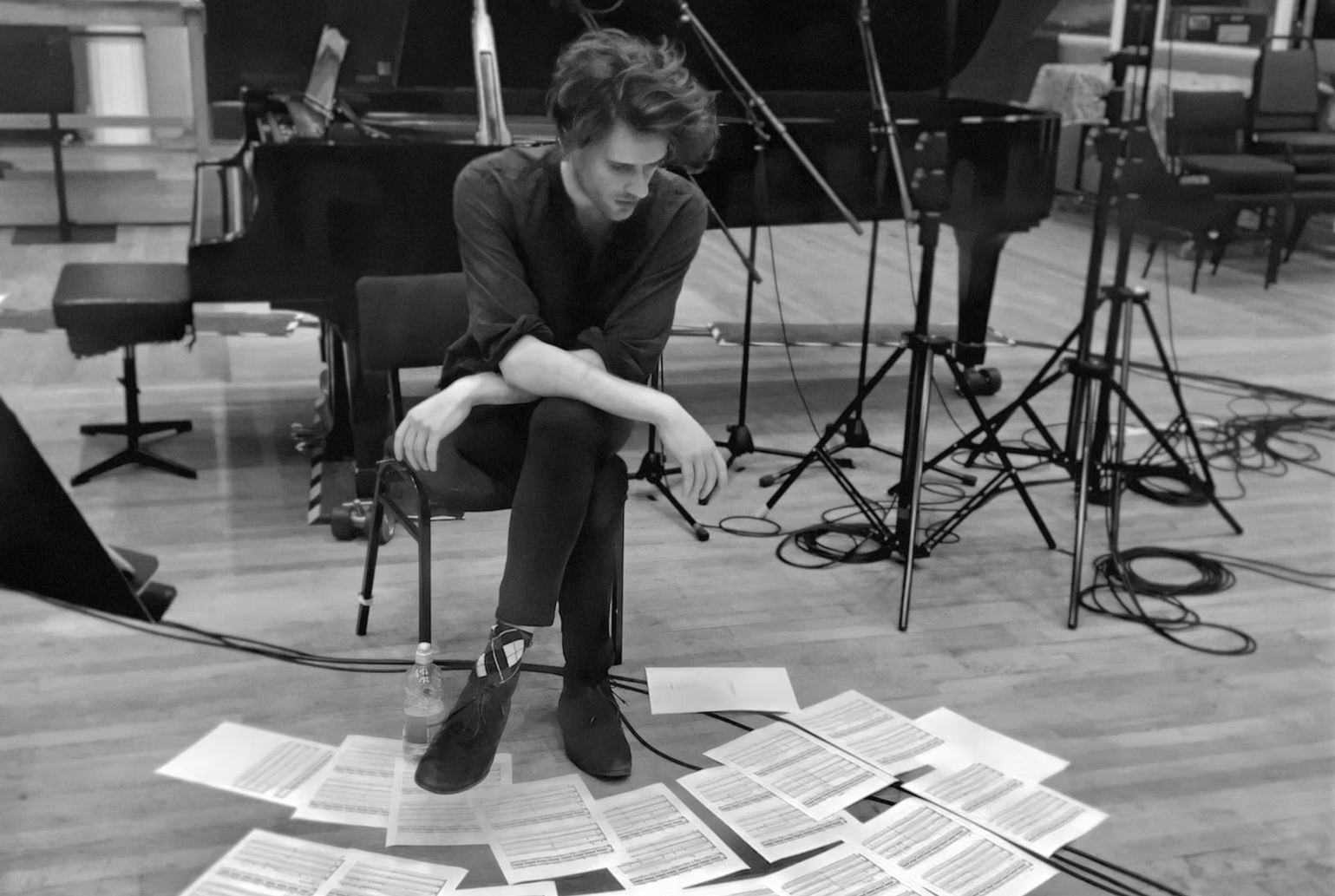
Benjamin Rimmer (b. 1993) is a London-based composer whose work ranges across chamber, orchestral, vocal, and ballet music. His music has been commissioned and performed by leading ensembles and arts organisations in the UK and Europe, including the Royal Philharmonic Society, Classic FM, and the Royal Scottish National Orchestra.
In 2018, he wrote his first full-length ballet score for Oper Graz. His wider work includes arrangements for major labels, instrumentalists, and vocal ensembles, including projects for Decca Records, Ray Chen, Jess Gillam, and VOCES8.
He studied composition at the Guildhall School of Music & Drama, graduating in 2016.
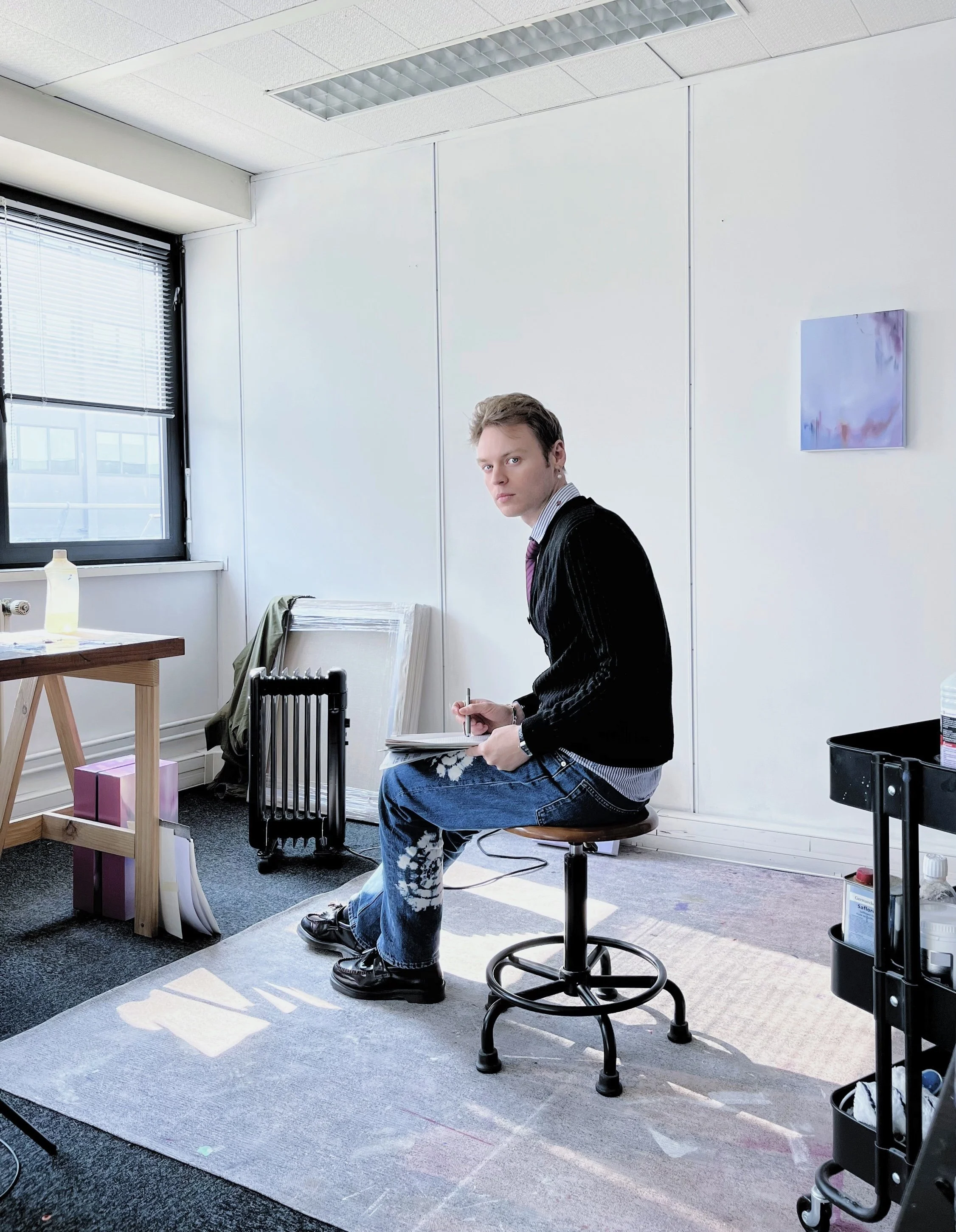
Gabriella first discovered Tristan Jon on a birthday trip to Paris in 2022, where he had a residency at 59 Rivoli. She often spends a lot of time in art galleries, always looking for new perspectives, often returning to the same exhibitions just to see how they feel the second time.
Tristan’s work has stayed with Gabriella ever since 2022. She feels there is something deeply spiritual about it; a quiet presence, something seen, and something unseen.
When it came time to find the visual heart of this release, he was the only artist who felt right. Gabriella is truly grateful to Tristan Jon for allowing her to pair his moving work with the music.